Interproximal Reduction (IPR) Explained: Making Space for Aligners
What interproximal reduction (IPR) is, why some aligner plans include it, how it is done, what it feels like and why not everyone needs it.
Disclosure: Aligners.com.pk is affiliated with ClearPath Orthodontics, maker of ClearPath Aligners. How we work.
If you have looked closely at a clear aligner treatment plan, you may have seen the letters "IPR" next to some of your teeth. For many people this is the part of treatment that sounds the most worrying. Polishing enamel? On purpose? It is a fair question to ask.
This guide explains what interproximal reduction is, why a provider might suggest it, how it is usually carried out and what it tends to feel like. Every mouth is different, so treat this as background reading, not a decision. A qualified dentist or orthodontist is the right person to tell you whether IPR is part of your plan and why.
What is interproximal reduction?
Interproximal means "between neighbouring teeth". Reduction means removing a very small amount. So IPR is the careful polishing away of a thin layer of enamel from the sides of certain teeth, where they touch each other.
The amount involved is usually tiny, often measured in fractions of a millimetre. It is done only on the contact surfaces, not on the front or biting surfaces of your teeth, so it is not something people can see when you smile. You may also hear it called "slenderising", "enamel stripping" or "reproximation". They all describe the same basic idea.
Why would a provider suggest IPR?
Teeth need room to move. When teeth are crowded, overlapping or turned, there may simply not be enough space in the arch for them all to line up neatly. A provider has a few ways to create that space, and IPR is one of them. Others can include gently widening the arch, moving teeth slightly forward or back, or, in some cases, removing a tooth. The right option depends on your teeth, gums, bite and facial profile.
IPR is commonly considered when:
- There is mild to moderate crowding and only a small amount of extra space is needed. Our post on crowded teeth and clear aligners covers crowding in more detail.
- Teeth have a triangular shape that leaves small dark gaps near the gum line once they are straightened. Gentle reshaping of the contact points can help close these "black triangles".
- The upper and lower teeth are slightly different in size, so the bite does not fit together well without a small adjustment.
- A tooth needs a little room to rotate into place.
IPR is planned in advance as part of your digital treatment plan. If you want to understand how that plan is built, see our guide to digital teeth scans.
How is IPR done?
The exact method varies between providers, but the general steps are similar.
- Checking the plan. Your provider confirms which contacts need IPR and how much, based on the treatment plan.
- Measuring. Thin gauges may be used to check the space before and after.
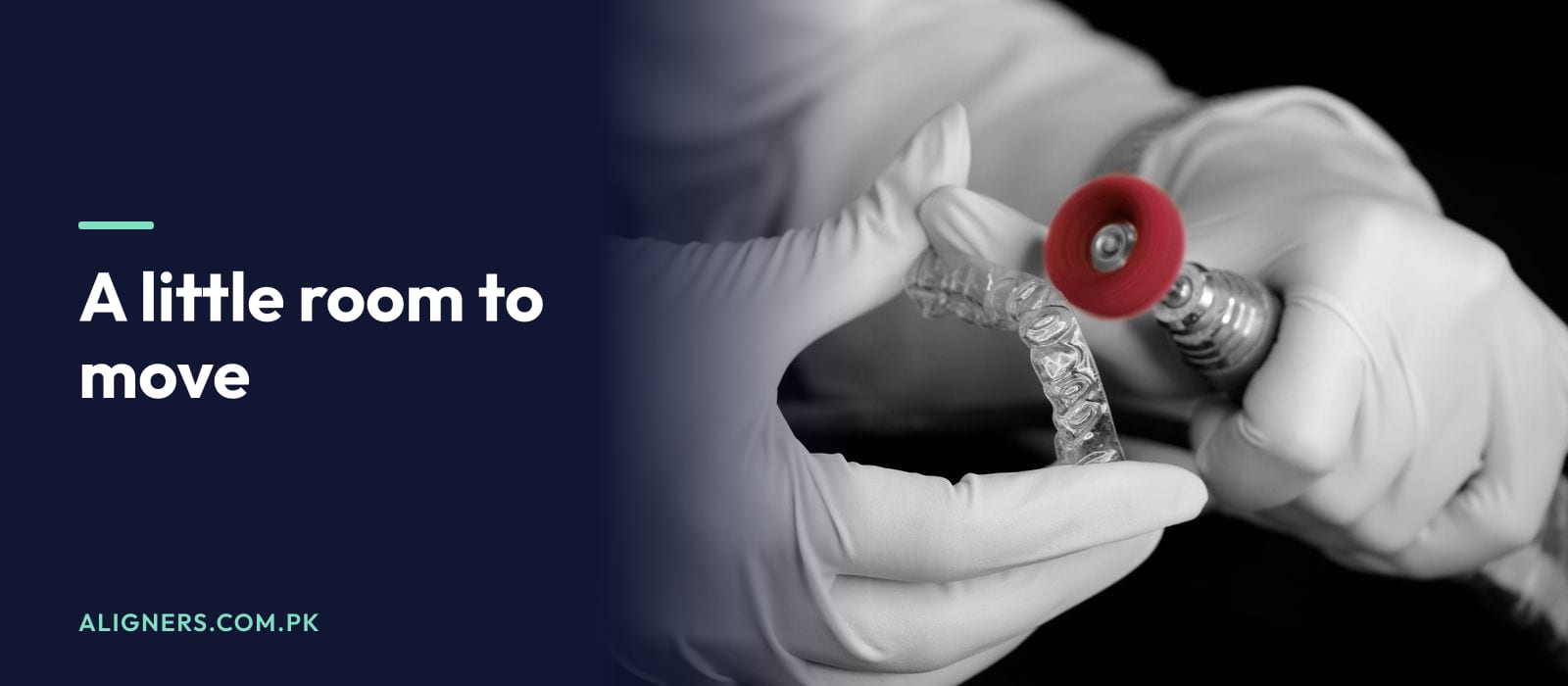
- Polishing. A fine abrasive strip, a thin disc or a special narrow bur is used to smooth the contact area. Strips are pulled back and forth by hand, a little like very firm floss.
- Smoothing and protecting. The surfaces are polished so they feel smooth, and some providers apply fluoride afterwards.
- Seating your aligners. You continue with your trays as usual.
IPR is not always done in one go. It is often spread across one or more check-up visits, at the stage of treatment where the space is needed. Sometimes it is done after teeth have started to straighten, because overlapping teeth are hard to reach at first.
Does IPR hurt?
Most people describe IPR as strange rather than painful. You may feel vibration, pressure or a scraping sensation, and hear a noise that can be a bit unsettling. Local anaesthetic is not usually needed because the work stays within the outer enamel, which has no nerves.
Afterwards, some people notice:
- Teeth feeling slightly rough or different to the tongue for a short time
- Mild sensitivity to cold for a few days
- Food catching between the teeth until the spaces close as the teeth move
These usually settle on their own. A toothpaste for sensitive teeth may help, and your provider can advise. If you have pain that is sharp, lasting or getting worse, let them know. For general guidance on discomfort, read does clear aligner treatment hurt?
Is IPR safe?
This is the question people ask most, and it deserves a careful answer. When it is planned properly and carried out within accepted limits by a trained professional, IPR is a widely used orthodontic technique. Enamel thickness varies from tooth to tooth and person to person, which is why the amount is kept small and is calculated rather than guessed.
Like any dental procedure, it is not completely without risk. Possible concerns include sensitivity, rough surfaces if the teeth are not polished well, and a higher risk of decay if the area is not kept clean. That is why your oral hygiene matters so much during treatment. The NHS has helpful general advice on keeping your teeth clean.
Good questions to ask your provider include:
- Which teeth will have IPR, and roughly how much?
- Why is IPR better for me than other ways of creating space?
- At what stage of treatment will it happen?
- What should I do if my teeth feel sensitive afterwards?
You can find more ideas in our list of questions to ask before clear aligner treatment.
Not everyone needs IPR
It is important to say this clearly: many aligner treatments involve no IPR at all. If your teeth already have small gaps, or if the plan creates space in other ways, there may be nothing to polish. People treating gaps between their teeth usually have the opposite problem, too much space rather than too little.
On the other hand, if you have a lot of crowding, IPR alone may not be enough, and your provider may discuss other approaches. A plan should be built around your mouth, not around a standard recipe.
Caring for your teeth after IPR
A few simple habits help after an IPR visit:
- Keep wearing your aligners as instructed so the new space is used as planned.
- Brush twice a day with a fluoride toothpaste, and clean between your teeth daily.
- Choose soft, mild foods for a day if your teeth feel tender. Daal, khichdi, yogurt and soft rice are easy options.
- Avoid very cold drinks for a few days if you notice sensitivity.
- Keep your trays clean, using the steps in our guide on how to clean clear aligners.
Do not try to close or widen the spaces yourself, and do not use anything sharp to pick between the teeth.
The bottom line
IPR is a planned, careful way to create a small amount of room between some teeth so they can line up. It usually feels odd rather than painful, any sensitivity commonly fades within days, and many people never need it. The key is that it is assessed and done by a qualified dentist or orthodontist as part of a clear plan.
If you are still learning the basics, start with our guide to clear aligners or see how they compare in aligners vs braces.


