Crossbite and Clear Aligners: What You Should Know
Front and back crossbites explained in simple terms, which cases may suit clear aligners, and when other orthodontic treatment may be needed.
Disclosure: Aligners.com.pk is affiliated with ClearPath Orthodontics, maker of ClearPath Aligners. How we work.
Most people think of orthodontics as straightening crooked teeth. But the way your upper and lower teeth meet when you close your mouth matters just as much. A crossbite is one of the bite problems that dentists look for, and it is a common reason people ask whether clear aligners could help.
This article explains what a crossbite is, the different types, and how a provider might decide whether aligners are a suitable option. It is general information only. A qualified dentist or orthodontist needs to examine your teeth, bite and jaws before any treatment is chosen.
What is a crossbite?
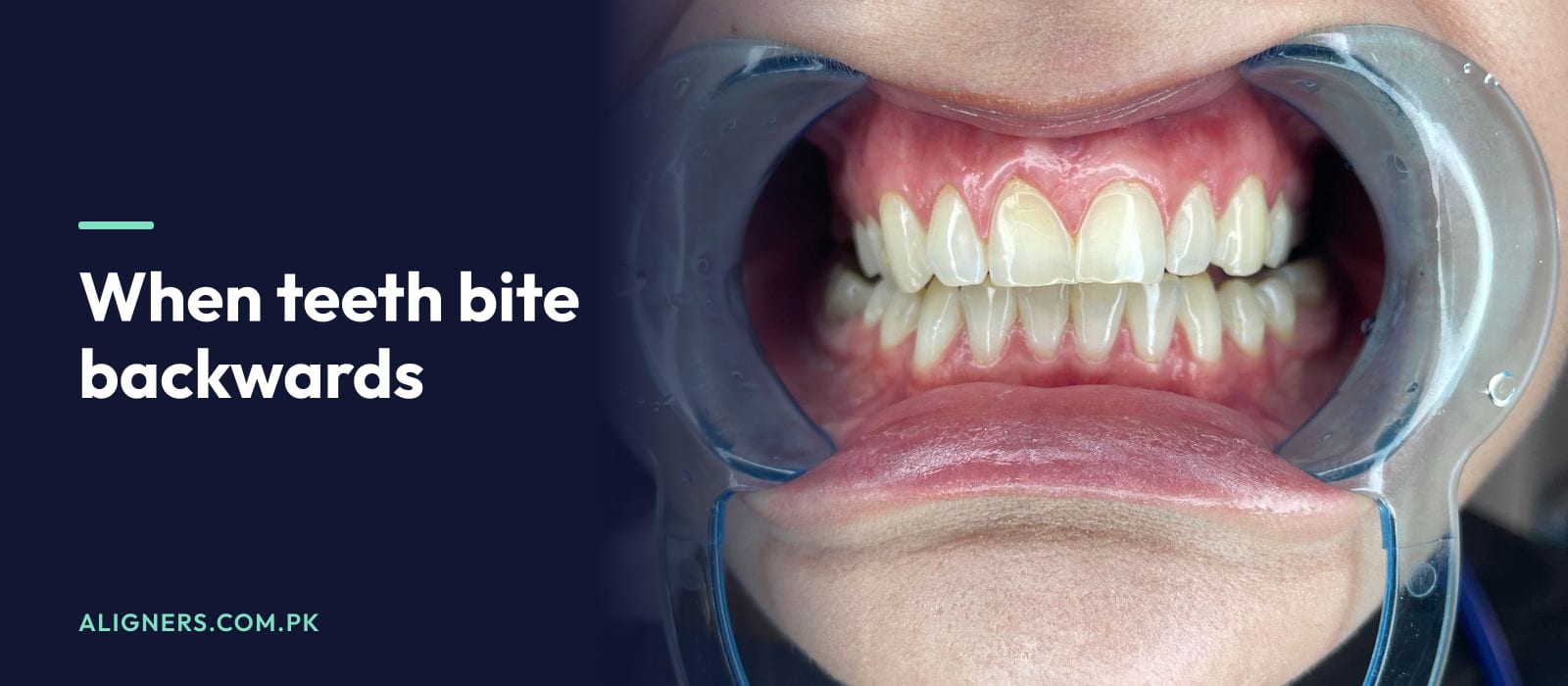
In a typical bite, the upper teeth sit slightly outside the lower teeth, a little like a lid sitting over a box. In a crossbite, one or more upper teeth sit inside the lower teeth when you bite together. In other words, part of the bite is reversed.
A crossbite can affect a single tooth or a whole group of teeth, on one side or both. Some people have had one since childhood without noticing. Others are told about it during a routine check-up.
Front vs back crossbite
Anterior (front) crossbite
An anterior crossbite involves the front teeth. One or more upper front teeth sit behind the lower front teeth when you bite. Sometimes it is just one tooth that grew in at a slightly wrong angle, often because of crowding. In other cases, all the front teeth are involved and the lower jaw may sit further forward than usual.
Posterior (back) crossbite
A posterior crossbite involves the back teeth, the premolars and molars. The upper back teeth sit inside the lower ones on one or both sides. This is often linked to an upper jaw or upper arch that is narrower than the lower one.
Some people with a one-sided back crossbite shift their lower jaw sideways to bite comfortably. Over time this can affect how the jaw works, so it is worth having it checked.
Dental vs skeletal crossbite, in simple terms
This is probably the most important difference when it comes to treatment choices.
- Dental crossbite: the jaws themselves are a reasonable size and position, but certain teeth are tipped or positioned the wrong way. The problem is mainly in the teeth.
- Skeletal crossbite: the cause is in the jaw bones, for example an upper jaw that is narrow or a lower jaw that is large or positioned forward. The teeth may be doing their best, but the foundation underneath does not match.
Many people have a mix of both. Working out the balance is something a provider does with a clinical examination, photos, X-rays and often a digital teeth scan.
Why treat a crossbite?
Not every crossbite causes trouble, but some can lead to problems over time. Commonly mentioned concerns include:
- Uneven wear on the teeth that hit each other the wrong way
- Gum recession on lower front teeth that are pushed forward
- Jaw strain if the lower jaw shifts to one side to close
- Difficulty chewing comfortably on one side
- Appearance concerns, especially with front crossbites
Your provider can explain whether treatment is advised in your case or whether monitoring is enough.
Can clear aligners fix a crossbite?
In many dental crossbites, aligners may be an option. Aligners move teeth in small planned steps, and they can tip, rotate and shift teeth outward or inward. To learn more about the mechanics, see how clear aligners move teeth.
Cases that may suit aligners include:
- A single upper front tooth caught behind the lower teeth, especially if crowding is the cause
- Mild back crossbites where the teeth are tipped inward rather than the jaw being narrow
- Crossbites that can be corrected by modest expansion of the tooth arch
Aligner plans for crossbites often use attachments to help the trays grip the teeth, and sometimes small elastics. Space may need to be created first, which could involve techniques such as interproximal reduction. Refinement trays are also common in bite correction; see clear aligner refinements explained.
When other treatment may be needed
Aligners are not the right tool for every crossbite. Other approaches may be recommended when:
- The crossbite is mainly skeletal, such as a clearly narrow upper jaw in an adult
- A large amount of jaw widening is needed
- The lower jaw is significantly forward, causing a reversed front bite across many teeth
- There are other complex issues, such as severe crowding or missing teeth
In growing children, providers sometimes use an expander to widen the upper jaw while the bones are still developing. In adults, where the jaw has stopped growing, a severe skeletal crossbite may need fixed braces, combined treatment with other appliances or, in some cases, jaw surgery planned with a specialist team. Our aligners vs braces page explains the general differences between the main options.
This is why timing and assessment matter. If you are a parent, it can help to have a child's bite checked early. Our post on clear aligners for teenagers covers some of the age-related questions.
What to expect during an assessment
A visit to discuss a crossbite usually includes:
- A conversation about what you have noticed, such as chewing problems or jaw clicking
- An examination of your teeth, gums and how your jaw moves when you open and close
- Records, such as photos, X-rays and a scan or impressions
- A discussion of options, including what aligners can and cannot realistically do in your case
- A rough timeline, with the understanding that every case is different
Ask your provider whether your crossbite is mainly dental or skeletal, what the likely result is, and whether there are any limits to what aligners can achieve. For general background on orthodontic care, the NHS orthodontics page is a useful starting point.
Living with treatment
If aligners are chosen, the everyday rules are the same as for any aligner case. Wear time is especially important for bite corrections, because teeth need steady pressure to move as planned. Our guide on how many hours a day to wear clear aligners explains why. Keep up with check-ups, clean your trays daily and let your provider know if your bite feels very uneven or your jaw aches.
The bottom line
A crossbite means some upper teeth sit inside the lower teeth. Front and back crossbites behave differently, and the biggest question is whether the cause is mainly in the teeth or in the jaws. Many dental crossbites may be treated with clear aligners, while skeletal ones often need a different approach. Only a qualified dentist or orthodontist can tell you which applies to you.
To explore more, read our guide to clear aligners or learn about other bite issues in overbite and clear aligners.


